Tuesday, September 8, 2015

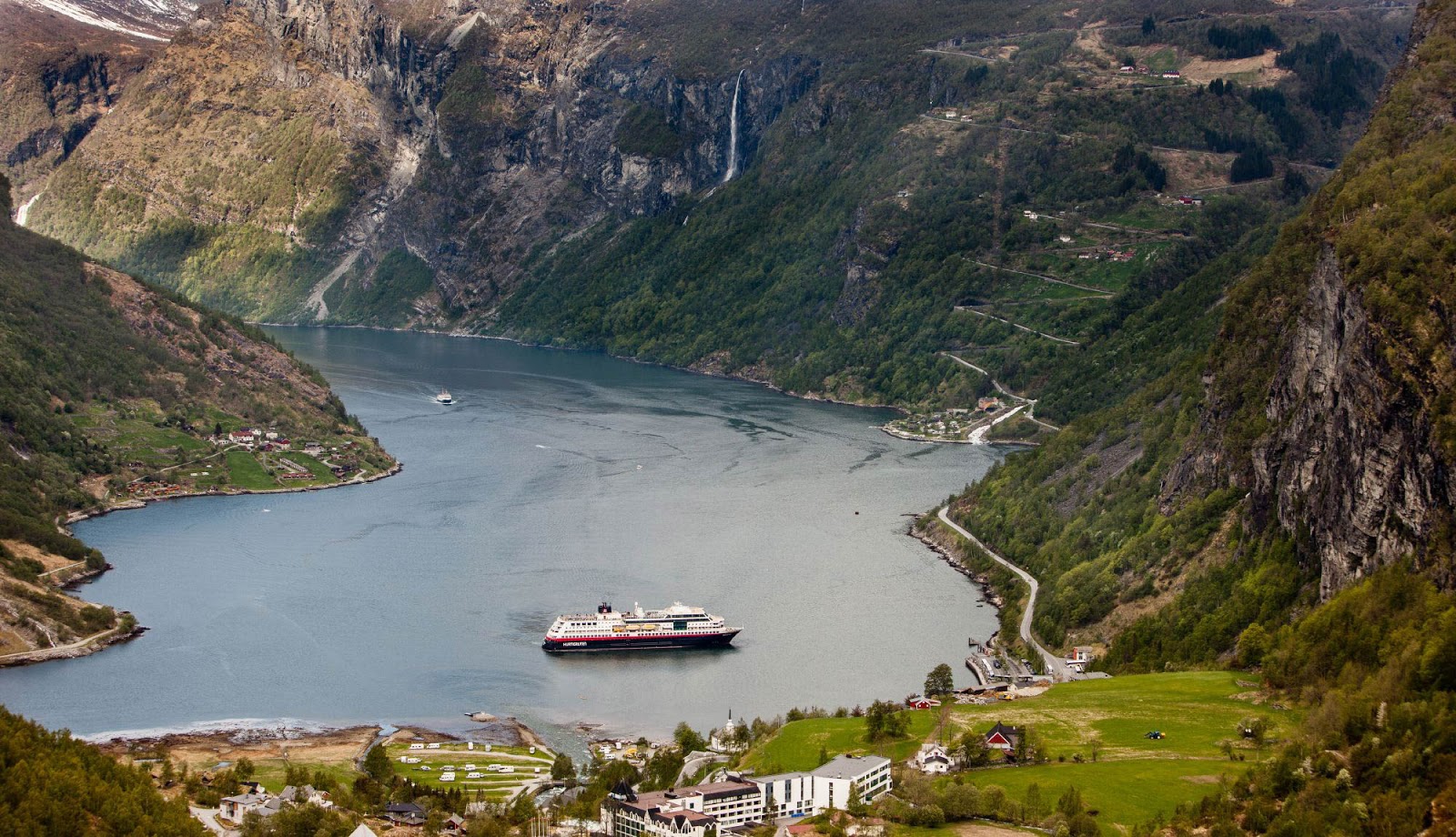
New Hurtigruten Ship

DISCOVER YOUR INNER EXPLORER

new Hurtigruten ship

MS Spitsbergen is named after the Arctic crown of Norway – the archipelago of Spitsbergen. Hurtigruten has a long history of traveling to Spitsbergen, dating back to 1896 with its ‘Sports Route’. After a complete reconstruction, MS Spitsbergen will be included in the Hurtigruten fleet in 2016. The ship will feature elegant, modern, comfortable public areas and cabins and the decor will reflect the color palette of the sea. The ship is environmentally-friendly and we will continue to make improvements to reduce emissions and fuel consumption. She will also be equipped and adapted for future sailings in polar waters. The new ship’s maneuverability and size makes her particularly suitable for exploring the coast of Norway and bringing Hurtigruten’s guests even closer to nature.

A NEW WAY TO SEE NORWAY

We've long celebrated the traveler who wants to see as many new things as possible (and those voyages are still plenty) but our new ship - the MS Spitsbergen - is for the wanderer, the ponderer, the sightseer. Spend a little time with us in Norway.  


Toll free: 800.722.4126

Sunday, August 23, 2015

MS Midnatsol to Southernmost Continent: Antarctica!

Exploring Antarctica with MS Midnatsol


MS Midnatsol offers an opportunity for travelers who possess a true spirit of exploration, and who want to “thrill” their senses by connecting with extraordinary natural surroundings - not just sailing by on a big ocean liner.  Here is the chance to connect with Antarctica’s gigantic ice, penguins, leopard seals, whales and albatross.  And more, to be among the fortunate few to step foot on the last untouched continent.  Back onboard, scientists will help deepen your understanding of Antarctica’s wildlife and environment, and expand your awareness of the fascinating world around you.

Midnatsol to Begin 2016 Operation in Antarctica

Seattle, May 2015 – Hurtigruten, a world leader in sustainable explorer travel, is moving the MS Midnatsol to Antarctica for the 2016/2017 season, more than tripling the company’s guest capacity for sailings in this important polar region. The MS Midnatsol will join the Hurtigruten’s well-known expedition ship, the MS Fram, increasing the company’s seasonal berths from 2,268 in 2015/16 to 6,800 berths in 2016/17.

Antarctica itineraries include highlights such as the Falkland Islands, Chilean fjords, Patagonia, the Magellan Strait and Cape Horn. Sailings will depart from October 2016 to March 2017 with prices ranging from $5,999 to $6,666 per person, double occupancy. 


Toll free: 800.722.4126

Thursday, April 30, 2015

Smyril Line M/F Norröna


Smyril Line has started their new season and has been sailing a few trips to Iceland, at the moment we are in the Shetland Islands with approximately 600 guest who have been on our special cruise to the Faroe Islands, Orkney and Shetland.

During the winter season we have made quite a few changes and updates on-board. The Simmer Dim Restaurant has become a Steak House, serving fantastic fresh salads and other tasty dishes in a relaxed and friendly environment.

Our Deluxe cabins have got a total make over with new furniture's and a great new look and furthermore our Naust Bar has become a Sport Bar with a new Sporty look. During the summer we will make sure that the guest will have the possibility to follow all the sport events which are going on through the summer.

Our famous Norrøna Buffet Restaurant is still serving both breakfast and dinner during the whole week. The Buffet offers such a wealth of dishes that one cannot possibly try them all in one evening, even if you will be tempted to. Every evening there are over 20 different hot dishes to choose from, in addition to somewhere between 40 and 50 cold dishes. And then there is the cheese, the fruit and the irresistible pastry selection.

Pre-Book and save up to 20%
We would very much recommend that your guest pre-book the food before the journey, not just because they save money, but also to make sure that they get a seat either in the Buffet or in the Steak House.
 

Tuesday, February 4, 2014

Tallink Silja Line


We would like to inform you about the upcoming dry docking dates for our vessels. Please check the exact dates below:


Victoria I - STOCKHOLM-TALLINN route
02.03.2014 - out of service in Tallinn 10:45
10.03.2014 - in service from Tallinn 18:00


Isabelle - STOCKHOLM-RIGA route
03.04.2014 - out of service in Riga 11:00
11.04.2014 - in service from Riga 17:30


Galaxy - TURKU-STOCKHOLM route
05.05.2014 - out of service in Turku 07:00
14.05.2014 - in service from Turku 08:15


Silja Symphony - HELSINKI-STOCKHOLM route
06.09.2014 - out of service in Helsinki 09:55
16.10.2014 - in service from Helsinki 17:00


   Toll free: 800.722.4126800.722.4126
   Tel: 360.923.0125360.923.0125
   Fax: 360.923.0488
   Web: http://5stars-scandinavia.com
   Email: info@5stars-scandinavia.com

Thursday, March 29, 2012

New Five City Baltic Cruise from St. Peter Line!

Five City Baltic Cruise
Helsinki - Mariehamn - Stockholm -Tallinn - St. Petersburg - Helsinki

 
ST. PETER LINE offers around the year for all passengers and nationalities up to 72 hours visa free stays in St. Petersburg with these two passenger ferries.

Enjoy St. Peter Line's visa free cruise on the M/S Princess Anastasia. Depart from Helsinki on Friday afternoon, via Mariehamn to Stockholm, where you have the full day at your leisure. Continue to Tallinn, with time for a city tour of Tallinn and Old Town with private driver/guide. Evening departure for St. Petersburg; full day to explore the imperial city of the Czars on your own, by St. Peter Line shuttle bus, or by private pre-arranged excursions.

As a novelty, Princess Anastasia will arrive from St.Petersburg to Helsinki on Friday mornings starting from 5 August 2011. New passengers from Helsinki can start with Princess Anastasia on Friday evening and sail via Mariehamn to Stockholm, Tallinn and St. Petersburg. In St. Petersburg they can stay visa free for two or three nights in a hotel before returning to Helsinki Port either with the other ferry Princess Maria on Thursday morning or the same ferry Princess Anastasia on Friday morning. Passengers from Stockholm can on Saturdays and Wednesdays go for visa free cruises spending from a day up to 72 hours (three hotel nights) in St. Petersburg before sailing directly back to Stockholm or via Helsinki and Mariehamn (in both you can jump off) back to Stockholm.


Please view our great offer on the Five City Baltic Cruise and all our St. PeterLine visa-free cruises from Helsinki and Stockholm to St. Petersburg, Russia.

Monday, March 2, 2009

Forbes Magazine: In Cod They Trust

Even in late March the weather can be nasty above the Arctic Circle, especially in the Lofoten Islands, where my German fishing buddy Ingrid Shumway and I were booked to compete in the Lofotcup, Norway's annual two-day cod fishing tournament. A 60-mile archipelago, the Lofotens fan across the Norwegian Sea like scared bait. They are one of the prettiest--and most out there--places on Earth. Sheared and whittled by 20,000 years of glacial ice, the islands are a sweep of 3,000-foot maritime alps and 3-billion-year-old granite plateaus. If Switzerland were flooded, it would look a lot like the Lofoten Islands.

Scattered about are little fishing villages marked by simple fishermen's cabins and two-story wooden cod-drying racks. But don't let the old charm fool you. The place is full of chic coffeehouses, good bookstores, hotels that could win design awards in Milan and some of the most sophisticated seafood anywhere. Especially cod dishes, the Lofotens' still-bustling cod fishery being the reason Viking traders bothered to settle these Lilliputian islands. A thousand years later, in 1991, islanders turned the opening of cod season into a national event and invited out-of-towners.

A word about cod and the Norse. The fish lies in rough relation to northerners as cattle do to Argentineans and sheep to New Zealanders. Norwegians eat it fresh; boiled with fat skeins of its own delicate roe; air-dried and baked into a tomato-based bacalao; or prepped with lye, which turns the fish into something resembling a bar of soap.

Tournament headquarters is in the village of Svolvær, nearly 800 miles (and two more flights) northeast of Oslo. By the time we arrived the light was blue and Svolvær's waterfront looked like Saturday night on Santorini--with Gore-Tex. The cafes were packed with jovial Norwegians, but we managed to squeeze in and enjoy some surprisingly lean and tasty hamburgers.

"Hvalburger," our server corrected. Whales, a fellow fisherman told us, follow the cod, so this was good news.

By morning Svolvær Harbor looked like D-day. Scores of boats carrying 500 or so contestants revved their engines while crews ran around filling bait tanks and checking tackle. Swathed in layers of fleece, wool and rubber, we Gumby-walked to the Blomøy, the 58-foot postwar chartered boat we would share with nine other fishermen, all from Oslo. The day was so clear the mountains looked mythic. The starting horn sounded to a hail of whoops, and we were off. But the moment we left the harbor a north wind kicked up, the sea convulsed, the sky went dead-cod green and ice-pick sleet soon hacked at our faces. We skedaddled into the first handy fjord, but it was so rough there the Norwegian Coast Guard followed us in. Nonetheless, the captain cut to an idle, and the fishing began.

The boat bucked nonstop, one icy wave after another crashed onto the decks, and the wind tied endless knots in our lines. There was something heroic about standing there and surviving. Dock gossip that evening was that almost no cod had been taken by anyone. Something wasn't right.

On the second day we awoke to a perfect Arctic storm. Stowed rope and crab pots made snowy hillocks onshore as we headed out in near whiteout conditions. Within minutes I was totally freezing.

"Dere is no bad weather, only bad clothes," one of the crew noted, glancing helpfully at my dishwashing gloves, which were all that the Svolvær hardware store had left. Then he told us that Blomøy means either "flower island" or "cauliflower" depending, we assumed, on how the fishing was going. The old boat managed to plow through nonstop rollers for 45 minutes before we lurched into another fjord. We resumed battle positions, armed with heavy Norwegian fishing rods and handsomely tooled saltwater reels--all of which counted for nada. After three hours of fish-free torture I'd had it.

Whoever said misery loves company was crazy. All I wanted to do was crawl off somewhere by myself and warm up. I settled for the hold and braved its perilous long vertical ladder only to find a crew member named Odd Burviuk already down there playing "Misty" on his accordion.

"Shouldn't you be running the boat or something?" I asked him.

"Too rough," he replied with a rococo flourish. "I joke. Dis is nothing."

So the old Blomøy can handle weather like this? "Awk!" spat Odd. "She yust need replacement in skandekk, floor and skin. Also dare is tæring damage in the aftermath bastard around some keel bolts in forskipet." After that explanation, he began to play "That Old Black Magic." A yell sounded from above decks. Someone finally had a fish on. I scrambled back up the ladder. The snow had stopped, the air was still, and the Good Ship Cauliflower was bathed in celestial light. I was thrilled to find that the fisherman fighting a fish was Ingrid.

She boated it, too, with a little help from our first mate's gaff. There it was, the ancient Norwegian coastal cod: the Homer Simpson upper jaw, the churlish little chin barbel, the big startled eyes popping out of a scale-less skin. But intriguing. This cold-water cannibal won't hesitate to dine on its younger brethren. It makes its own enzymatic antifreeze that lets it handle water temperatures icy enough to make a grown man … pick up the accordion.

Ingrid's 8-pound cod won her ninth place in the women's division, an achievement we toasted at the Lofotcup awards ceremony on the waterfront that night. But the real celebration began when she led us and some Oslo pals to Svolvær's Rica Hotel, where she had snagged a room with a fishing hole cut into its floor. We settled into armchairs, poured brandy and cast our bait to the wind beneath our now warm feet.

View the Article

Tuesday, May 1, 2007

Gourmet Magazine: Pride of the Norwegian Wood

NORTH OF OSLO, A UNIQUELY LARGE POPULATION OF THE GIANT GROUSE KNOWN AS THE CAPERCAILLIE DRAWS HUNTERS FROM AROUND THE WORLD BY JESSICA MAXWELL

ON A NARROW FRET OF LAND between Sweden and the Norwegian Sea, Sea, the trees are alive with the sound of capercaillie, the largest species of grouse on earth. Big as a turkey, handsome as a hummingbird, male capercaillie (pronounced "caper-kelly") can weigh up to 15 pounds and are detailed like race cars, with bright indigo backs, mahogany wings, and a blaze of malachite iridescence across the front, all of which the dusky females find irresistible.

Capercaillie are well known for the ruckus they make when startled, something like a pony crashing through the brush, hence their sobriquet, an old Gaelic word for "horse of the woods." And the flesh of this woodland grouse has seduced hunters for centuries. Fine-grained and lilac-mauve, it has a pungency reminiscent of guavas soaked in retsina, the gift of a diet rich in forest berries and pine shoots.

Once common throughout northern Europe, capercaillie had been hunted to extinction in the British Isles by the late l700s. Small, scattershot populations exist today in the French Pyrenees, Slovakia, Scotland, Russia, and the Czech Republic, but a remarkably high ratio of forest to people supports hundreds of thousands of breeding pairs in Scandinavia. Especially in Norway, which is why I was stork-stepping through foot-high snow in a 30,000-acre family forest a few hours' drive north of Oslo, trying to follow the poodle-yip of a little red Finnish bird dog, which, my Swedish hunting guide assured me, had treed an iibergrouse only a few miles away. "When Molly barks, she has found a bird," explained Bertil Kainulainen, a renowned
shooting champion who had been recruited to lead our hunt.

"Now we have to find it," added Knut Arne Gjems, the cheerful, sea-eyed 26-year-old son of our hosts, UlfErik and Gerd Gjems (pronounced "yems"), whose family has owned and hunted this forest for 150 years.

Being so heavy, capercaillie don't really like to fly, and whenever Molly found one, she chased it into a treetop, then distracted it with her incessant yapping so we hunters could, theoretically, sneak up on it unnoticed. So far, every bird had escaped long before we'd gotten to it. Once, we found Molly barking at absolutely nothing. "She smells some oil from a bird," Bertil explained. "But it flew."

Moments later, the dog was off again on what we dubbed another "Molly bolt," and so were we, navigating the cool beauty of the woods, which, given the lack of hunting action, had become its own reason for being there. Having lived in the American Northwest most of my life, I've seen my share of forests. But the Gjems' forest felt enchanted, like the antechamber to Valhalla. A dappled land of birch, pine, and lake, it has, even at midday, a vespertine quality that makes you want to speak in whispers, which made Molly's racket all the more jarring. But that's bird hunting. And this was certainly the place to do it. Thanks to the exceptional management of Ulf, Knut Arne, and his older brothers, Ole Jorgen and Haakon Einarprofessional foresters all-this grand forest remains a virtual larder of ducks, geese, black and hazel grouse, and the elusive capercaillie, not to mention moose, deer, hare, trout, perch, pike, and even thrilling nongame predators: wolf, lynx, and brown bear. But the capercaillie is the most coveted game, a legendary staple traditionally served with lingonberry jam, Norway's answer to turkey with cranberry sauce.

We'd been walking for something like five hours, not counting a break for a good camp lunch of bacon mooseburgers and hot coffee. Molly, as always, was off somewhere, barking like a crazy thing, and we were trudging up yet another snowbound hill, an army looking for a war. Then, without warning, a rapid swooshing sound passed overhead.

"Capercaillie," Bertil announced with quiet admiration, like John Wayne pointing out Rita Hayworth. We saw nothing. But the closeness ofthose mighty wings had set my heart on edge. The hunt was on.

A few minutes later we saw them: five rufous-throated females and a dark male, pecking at pea gravel not 20 yards away.

"I have never seen so much capercaillie here," Knut Arne whispered to me.

Diving behind a tall snowbank, Bertillay down sideways and motioned for me to steady my gun barrel across his back. This was crazy. And dangerous. And it worked. Despite my raging pulse, I got the male squarely in my rifle sight... then he ducked, and moved out of view. As with making sauces and taking photographs and broaching delicate but necessary subjects with a loved one, a hunting shot requires good timing. There is a right moment, then it is gone.

"Why didn't you shoot?" Bertil asked.

Why? Because I'd never gone bird hunting with a rifle, only a shotgun. Because I'd only shot a rifle three times in my life... at target practice the day before. I hit the sweet spot on the cardboard capercaillie each time only because I love animals and cannot bear the thought of wounding one and want to take it square or not at all. And because when the capercaillie ducked, the sweet spot ducked with it, and I was unwilling to take a chance on anything but certain, pain-free death. "It is a rifle," Bertil replied. "You would have killed it."

WE WALKED DOWN MANY MILES of frosty lane that day, hot on the trail of Molly's promising bark. She seemed to find a capercaillie in every cardinal direction, only to have it vanish on the wing. We walked until around three that afternoon, when the light was falling and so was the temperature, and my fingers felt like frozen fish sticks. That's when Bertil's foxy little bird dog became a cinnabar comet streaking up a slope. He took off after her, and I after him. Forty-five minutes and five uphill football fields later we found the tree.

"There," he said, and pointed up at such an obtuse angle I thought he meant the sky.

"No, Yessica, there," he repeated, turning my head toward the top of a very tall spruce. But all I saw was a thatch of branches.

"I don't think that's a bird," I ventured.

"It is a bird," Bertil declared. "Shoot it."

It's hard to disobey the John Wayne of Sweden. So after a Keystone Cops episode of Berti I trying to get me to use his shoulder as a rifle rest and my chickening out three times for fear of ruining his hearing (or worse), I knelt in the snow, leaned into a tree, and took aim. My heart hopped like a pogo stick and so did the thatch of branches in my scope. My blood played kettledrums inside my ears, my arms cramped from holding the heavy rifle so high, and I was panting like a lover. There was no way I could hit anything. Then something hard and true fell into my solar plexus. My pulse slowed. My mind cleared. And soon the capercaillie hung on the cross in my rifle scope. And I pulled the trigger.

"You got it!" Bertil hollered, then ran to get to my bird before Molly did.

It was a yearling male, nearly eight pounds, dropped against all odds at 65 yards in the dark, in the snow, in the good Norwegian woods. There in my arms, the blue and green of its feathers playing against the black, it looked like a gigantic collapsed petunia, the warrior's corsage.

My capercaillie was prepared that night by Jorgen Bestum, who is the gifted young chef at Skaslien Guesthouse (062-94-6666), in nearby Kirkemer, and whose cooking trumps that of chefs at many big-name restaurants. Jorgen made us a starter of crisp-skinned lake trout with leeks and asparagus done in a light butter cream sauce, followed by a champignon consomme with tomato concassee and fresh parsley, so rich with the essences of capercaillie bones, it could have held its own in Paris. As could the rounds of walnut bread that Jorgen baked himself. Our third course was Ulf's mother's recipe, the Gjems Capercaillie Sandwich, a hache of thigh meat on toast with a ragout of Lithuanian chanterelles, crowned with half a roasted capercaillie heart.

But the prize went to the edgy, sexy roasted breast of capercaillie served sherbet-pink in half-inch slices as generous and aromatic as the woods from which the bird came.

"Capercaillie is the grouse de resistance!" I proclaimed.

"And I am Yohn Wayne of Sweden!" countered Bertil. "And I say it is the time for the hunting toast!"

View the Article